
Arcadigo guide
Online 1v1 strategy games: hold your lane in Bastion Lanes
Learn how to manage energy, defend a lane and time a counter-push in Bastion Lanes, a browser strategy game with 1v1 and team modes.
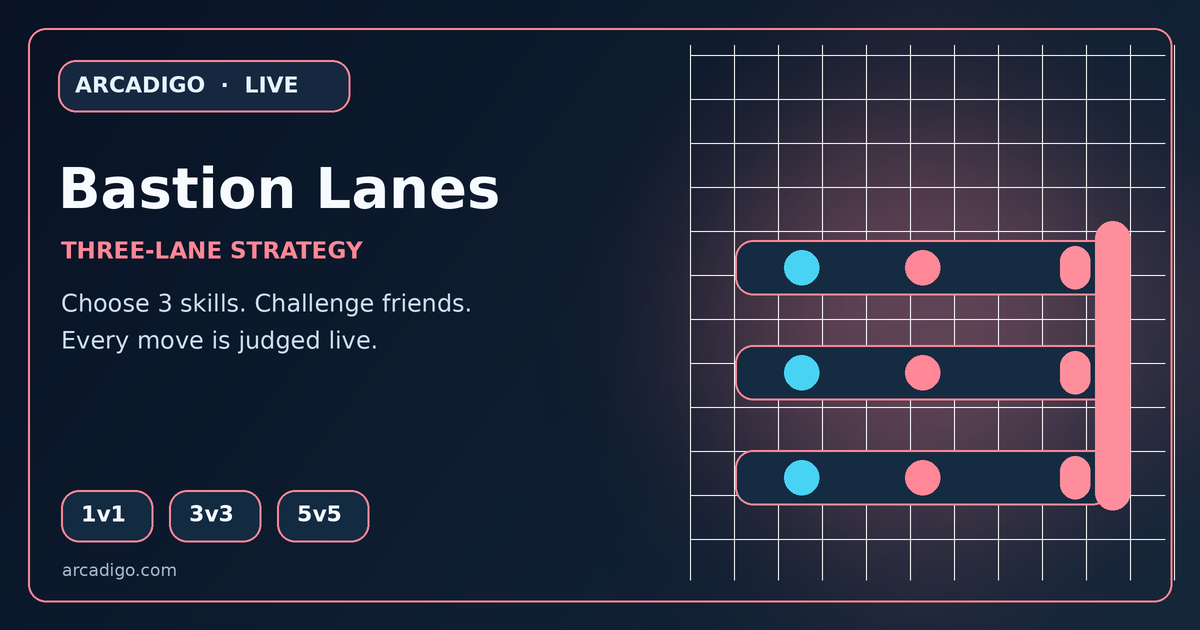
<p><strong>Online 1v1 strategy games</strong> are most interesting when every action changes what your opponent can do next. Bastion Lanes is a browser lane battler: spend regenerating energy to deploy units, defend against an incoming wave and look for a route to the rival base. Destroy that base to win immediately. If neither side breaks through, the healthier base wins at the end of the 90-second round, with up to 15 seconds of overtime when damage is tied.</p> <h2>Read the three lanes before spending</h2> <p>At the start of a match, scan all three lanes instead of sending every unit down the centre. A lane with no enemy pressure can become a useful route, while a visible opposing unit may need an answer before it reaches your base. Keep track of your base health and the lanes where the next clash is forming. The board is small enough to watch quickly, but reacting to only one lane can leave another undefended.</p> <p>In a 1v1 match, you make each deployment yourself. Ask what the move must achieve: stop a threat, protect a valuable unit or start pressure where the rival has spent energy elsewhere. Dropping a unit simply because energy is available can leave you unable to answer the next push. A deliberate wait is useful when it lets your energy refill for a stronger response, provided the opponent is not already threatening the base.</p> <h2>Use energy as a budget</h2> <p>Energy regenerates, so it has a time value. Spending it all on a large wave may create immediate pressure, but it also removes flexibility for the next few seconds. A smaller unit can be enough to intercept an enemy while preserving energy for a counter-push. The right choice depends on the unit, lane, opposing formation and current base-health lead. Read the unit cost and role in the current game rather than relying on a build order from another version.</p> <p>Notice whether your opponent reacts to every deployment. If they repeatedly overcommit to one lane, a measured push elsewhere may force them to divide their defence. If they hold energy, do not assume they are inactive; they may be saving for a stronger counter. Track what has appeared on the field and make your next choice from that information, not from a guess about the rival’s hidden plan.</p> <h2>Defend first when the base is exposed</h2> <p>A unit that reaches the base can turn a small mistake into a rapid loss. When a lane is open, prioritise an interception over a distant attack unless your own push can end the match first. Try to place a defender where it can meet the enemy before the base, then watch whether the unit survives long enough to create a counter-push. Trading a small amount of damage for a safer energy position may be better than sending another unit into a crowded lane.</p> <p>Do not defend with the same response every time. If the game offers units with different costs or roles, compare their practical effect against the threat. A quick inexpensive defender may buy time, while a tougher unit may handle repeated pressure. Check the in-game description and the actual interaction on the lane. The best response is the one that prevents meaningful base damage while leaving enough resources to contest the next wave.</p> <h2>Choose where to counter-push</h2> <p>After defending successfully, look for a lane that the opponent has left thin. A counter-push is most useful when it follows a favourable exchange and arrives before the rival can rebuild a defence. Avoid sending units into a lane just because it looks empty for a moment; the opponent may still have enough energy to respond. Consider whether your current lead is based on base health, unit position or both.</p> <p>Split pressure can make a rival choose between two threats, but dividing your energy too early can weaken both attacks. A concentrated group can be easier to stop, yet a second lane may prevent the defender from focusing everything in one place. Try one simple plan per match: defend one lane and counter through another, then review whether the timing worked. This makes it easier to learn from a close result.</p> <h2>Play to the clock and the score</h2> <p>With a 90-second round, the value of a move changes as time runs down. Early in the game there is time to rebuild after a failed attack. Near the end, base health and the units already on the field matter more. If you are ahead on health, avoid an unnecessary all-in push that exposes your base. If you are behind, you may need to accept more risk, but first look for a lane where the opponent cannot answer efficiently.</p> <p>When the timer ends with equal damage, the game can enter up to 15 seconds of overtime. Treat that as a short continuation of the same match rather than a fresh start. Keep enough energy for one decisive response and watch the scoreboard or base-health display. The current rules and overtime details are shown on the game page, so check them if the mode changes.</p> <h2>Solo practice and team modes</h2> <p>Bastion Lanes also offers team sizes beyond 1v1. Team play can make it easier to assign attention to different lanes, but only if players communicate who is defending and who is building pressure. In a solo duel, practise reading the full field and track how long it takes for energy to recover after a major deployment. The small format makes it easy to test one change in each match.</p> <p>For a quick practice loop, start with a conservative opening, defend the first clear threat and save enough energy for one counter. After the round, identify the moment that changed the base-health balance. Did you spend too early, ignore a lane or push into a prepared defence? Change one habit in the next match. This is more useful than copying a supposed unbeatable strategy that may depend on a different opponent or game update.</p> <h2>Start a match in your browser</h2> <p>The <a href="https://arcadigo.com/games/bastion-lanes">Bastion Lanes page</a> has the current game information and a link to play. Open the mode, check the controls and read the unit descriptions before your first deployment. Browser performance and connection quality can affect how quickly actions appear, especially on mobile data; leave enough time to confirm that a move registered.</p> <p>For players looking for online 1v1 strategy games, Bastion Lanes rewards lane awareness, energy discipline and a well-timed defence. You do not need to make a complicated opening. Watch the base-health difference, protect the lane that is actually under threat and spend energy when it advances a clear plan. Each round is short enough to test a new idea and learn which choices fit your style.</p>